| Category | Feature | Specification & Details |
|---|---|---|
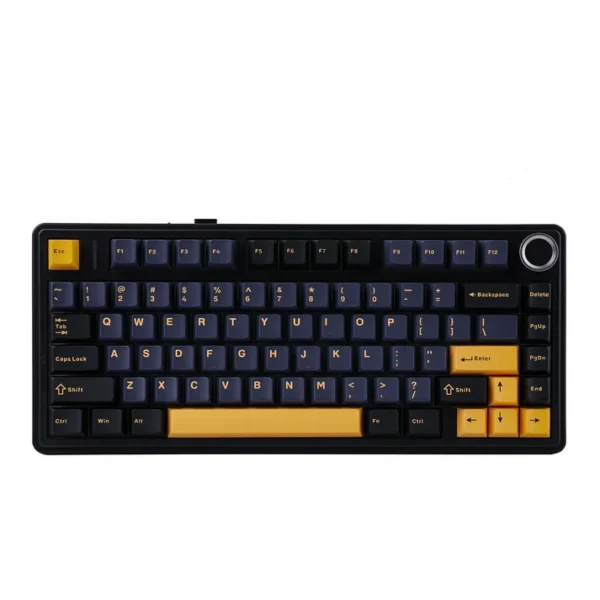
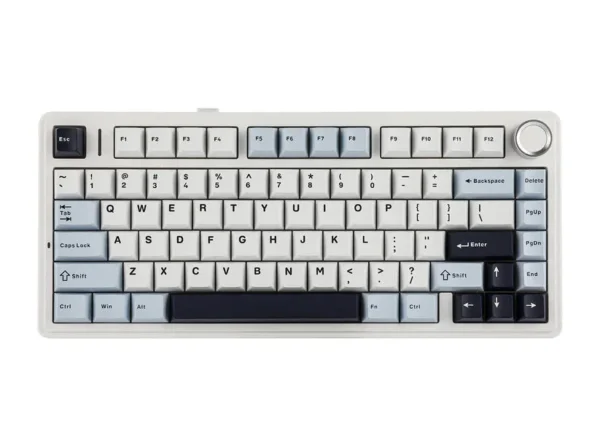
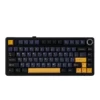
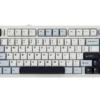
| Layout & Control | Form Factor | Space-saving 75% compact layout (80 physical keys). Features dedicated, separated arrow keys and a full function (F1–F12) row while dropping the number pad. |
| Control Knob | Textured aluminum rotary media knob in the top right. Offers instant volume tracking (turn) and play/pause system control (press). | |
| Acoustics & Build | Mounting Architecture | Premium Gasket-Mounted structure paired with a highly flexible, flex-cut Polycarbonate (PC) plate. Delivers a soft, bouncy, and highly cushioned typing feel. |
| Sound Dampening | Heavy-duty 5-layer sound optimization system (Poron sandwich plate foam, IXPE switch pads, PET sound-enhancement film, premium case cotton, and a molded bottom silicone cushion) that removes all hollow echoes to produce a deep, “thocky” or creamy acoustic signature. | |
| Switches & Hot-Swap | Full-key hot-swappable south-facing PCB supporting 3-pin and 5-pin switches. Most famously ships with factory-lubed, ultra-smooth LEOBOG Reaper Linear switches or LEOBOG Graywood V3 switches. | |
| Keycaps | High-grade, fade-resistant Double-shot PBT keycaps shaped in a comfortable Cherry profile layout. | |
| Connectivity & Power | Tri-Mode Connection | Seamless wireless agility across low-latency 2.4GHz wireless (with a dedicated magnetic storage bay on the frame), Bluetooth 5.0 (pairs up to 3 hosts), and a detachable USB Type-C wired hookup. |
| Polling Rate | Esports-ready 1000 Hz polling rate across both wired and 2.4G wireless connections for zero input lag. | |
| Battery Capacity | Robust 4,000mAh internal lithium rechargeable battery. Squeezes out up to 30 hours of continuous play with full RGB lighting active, or roughly 80+ hours with the light matrix turned off. | |
| Illumination | Per-key RGB backlighting matrix boasting 26 on-board dynamic lighting effects alongside software-driven music-sync algorithms. |